

St. Stephen’s Basilica Interior Guide: What to See Inside
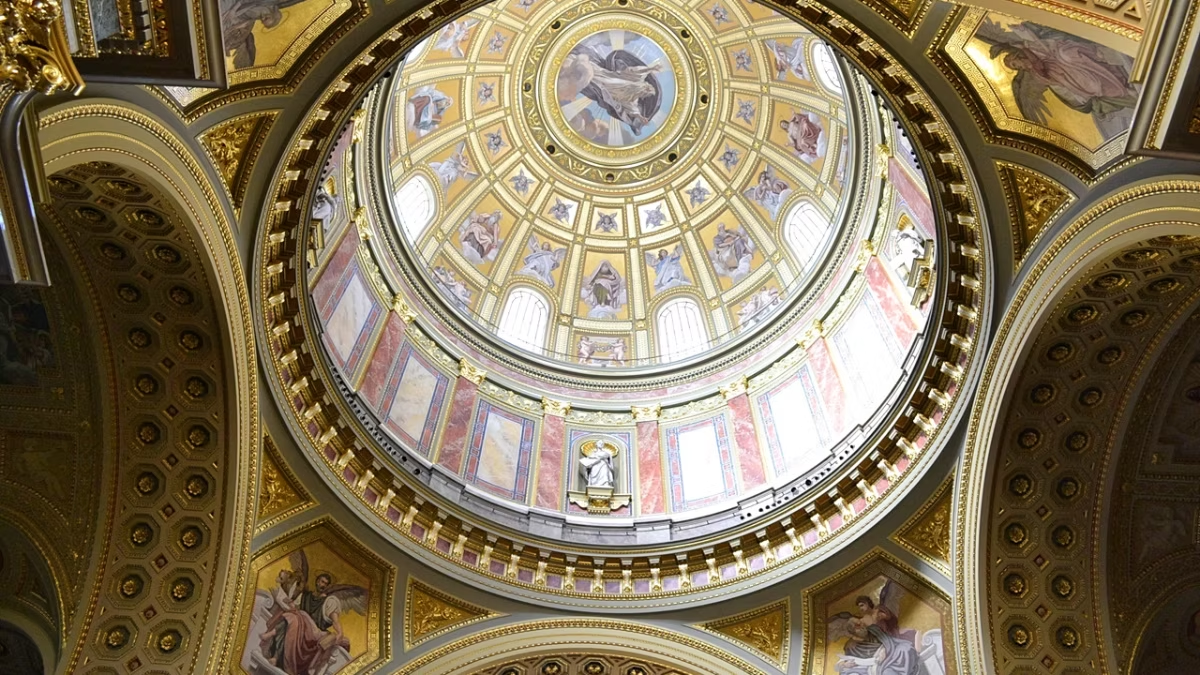
Inside, St. Stephen’s Basilica is a single Greek-cross hall faced in colored marble and gilding, with a mosaic-covered dome overhead, a Carrara marble statue of St. Stephen at the main altar, side chapels with paintings, the Holy Right Hand relic in a chapel behind the altar, and a great organ used for regular concerts. Plan on 20–40 minutes to walk the hall slowly and look up.
Once you’re through the door, St. Stephen’s Basilica opens into one broad hall built on a Greek-cross plan — four arms of roughly equal length meeting under a central dome. The scale is the first thing most visitors notice: the church holds around 8,500 people, and the marble, gilding, and painted and mosaic surfaces are meant to be taken in slowly rather than rushed through.
This guide walks the interior room by room — the nave, the dome, the main altar, the side chapels, the Holy Right Hand chapel, and the organ — so you know what to look for and where to look up. Because this is an active parish church, keep voices low and dress modestly, and be mindful if a Mass or service is underway.
The Greek-Cross Nave
The interior is built as a Greek cross — a central space with four short arms of near-equal length — rather than the long single nave typical of many cathedrals. This compact, symmetrical layout is part of the neoclassical design carried through by architects József Hild, Miklós Ybl, and József Kauser.
Walking in from Szent István tér, you’re standing at the crossing of that cross-shaped plan, with the dome directly above and the main altar straight ahead. The layout keeps every part of the hall visible from the center, which is one reason the space reads as vast rather than deep. For the full story of how three architects carried the building through its 54-year construction — and the 1868 dome collapse that forced a rebuild — see our guide to the basilica’s architecture.
Marble and Gilding
The lower walls and piers throughout the hall are faced in a range of colored marble — warm reds, greens, and golds worked into columns, panels, and floor patterns — while the upper surfaces and vaulting carry gilded stucco ornament. It’s a deliberately rich material palette, typical of the late-19th-century taste that shaped the building’s final decades of work under Kauser. Take a moment near the crossing to look at how the marble tones change from pier to pier; very little of the surface repeats exactly.
The Dome and Lotz’s Mosaics
The interior of the dome is covered in mosaics designed by the Hungarian painter Károly Lotz, best seen by standing at the crossing and looking straight up. The dome sits 96 meters above the square outside — a height shared with the Hungarian Parliament by long-standing convention — though the interior view is naturally much closer.
This is the single best “look up” moment inside the basilica. The dome’s inner surface is decorated with mosaic work after designs by Károly Lotz, one of Hungary’s leading late-19th-century painters, whose figures and ornament wrap the drum and crown of the dome in a way that’s hard to photograph fully but easy to stand under and take in. Natural light from the dome windows shifts the mosaics’ color through the day, so a visit at a different hour can look noticeably different from a previous one. If you’d rather experience the dome from the outside — the panorama terrace that circles it — see our terrace guide; that’s a separate ticket from the church-hall visit described here.
The Main Altar and the Carrara Marble Statue of St. Stephen
At the far end of the hall, the main altar is set beneath its own smaller dome and centers on a statue of St. Stephen carved from Carrara marble, the same fine-grained Italian stone long favored for detailed figural sculpture. The statue depicts Hungary’s first king, for whom the basilica is named; our page on King Stephen I covers who he was and why he’s honored here. The altar area is where most of the hall’s sightlines converge, and it’s worth approaching slowly to appreciate the scale of the surrounding marblework and gilding before moving on to the chapels around it.
Side Chapels and Paintings
Around the perimeter of the cross-shaped hall, a series of side chapels open off the main space, each with its own altar, decorative marble, and paintings depicting saints and scenes from Hungarian and Christian history. These chapels are quieter corners of the building and reward a slower pass — many visitors walk straight to the dome and the main altar and miss them. None require a separate ticket; they’re included in the church-hall visit.
The Holy Right Hand Chapel
The Holy Right Hand (Szent Jobb) — the mummified right hand of King St. Stephen I and Hungary’s holiest relic — is kept in a chapel directly behind the main altar. A coin-operated light briefly illuminates the reliquary so visitors can see it clearly. It is carried in procession through Budapest each August 20, St. Stephen’s Day.
This is the most solemn stop on the interior walkthrough. The relic chapel sits behind the main altar, and viewing it is part of the standard church-hall visit — no extra ticket is needed to see it. Because the Holy Right Hand is a genuine object of veneration and not only a historical curiosity, visitors are asked to approach quietly and respectfully, particularly if others are praying nearby. For the full history of the relic, how it survived the centuries, and the August 20 procession, see our dedicated guide to the Holy Right Hand.
The Great Organ
Set at the rear of the nave, the basilica’s organ is one of the largest in Hungary and is put to regular use: the church hosts both dedicated organ concerts and broader classical music concerts in the nave, taking advantage of the building’s strong stone acoustics. These evening concerts, usually around an hour long, are ticketed separately from daytime sightseeing entry and are worth building into an evening visit if you’d like to hear the space rather than just see it.
Where the Interior Visit Fits
The church-hall ticket covers everything described here — the nave, dome interior, main altar, side chapels, and Holy Right Hand chapel — separately from the panorama terrace and treasury, which are add-on tickets. See our ticket prices guide for the current breakdown, and note that coming to pray or attend Mass is always free; only sightseeing outside of service times requires a ticket. If you’d like to see the interior captured well before you go, browse our photo guide for a preview of the nave, dome, and altar.
Frequently Asked Questions
What is there to see inside St. Stephen’s Basilica?
The interior includes the Greek-cross nave in colored marble and gilding, the mosaic-covered dome by Károly Lotz, the main altar with its Carrara marble statue of St. Stephen, several side chapels with paintings, the Holy Right Hand relic chapel behind the altar, and the great organ at the rear of the nave.
Where is the Holy Right Hand inside the basilica?
The Holy Right Hand (Szent Jobb), the mummified right hand of King St. Stephen I, is kept in a reliquary chapel directly behind the main altar. It’s included in the standard church-hall visit, and a coin-operated light briefly illuminates the reliquary for viewing.
Who made the mosaics in the dome?
The dome’s interior mosaics were designed by Károly Lotz, a prominent Hungarian painter of the late 19th century. They cover the drum and crown of the dome and are best viewed by standing at the crossing of the nave and looking straight up.
What is the main altar statue made of?
The statue of St. Stephen at the main altar is carved from Carrara marble, the fine white Italian marble long used for detailed figure sculpture. It stands beneath the altar’s own smaller dome at the far end of the nave.
Do I need a separate ticket to see the Holy Right Hand or the dome interior?
No. Both are included in the standard church-hall ticket. The panorama terrace around the outside of the dome and the treasury are separate add-on tickets, distinct from the interior visit described here.
Are concerts held inside the basilica?
Yes. Organ concerts and classical music concerts take place regularly in the nave, making use of the building’s acoustics and its large organ. These are roughly an hour long, held in the evening, and ticketed separately from daytime sightseeing.
How long does it take to see the interior?
Most visitors spend 20 to 40 minutes walking the nave, the dome crossing, the main altar, the side chapels, and the Holy Right Hand chapel. Add more time if you plan to sit for a while or attend part of a service.
Is it respectful to take photos inside?
Photography is generally allowed in the main hall, but the basilica is an active parish church, so keep phones and cameras quiet and be especially considerate near the Holy Right Hand chapel and during services. Follow the dress code — shoulders and knees covered — throughout the visit.
