

Budapest Card vs St. Stephen’s Basilica Tickets: Cheaper?
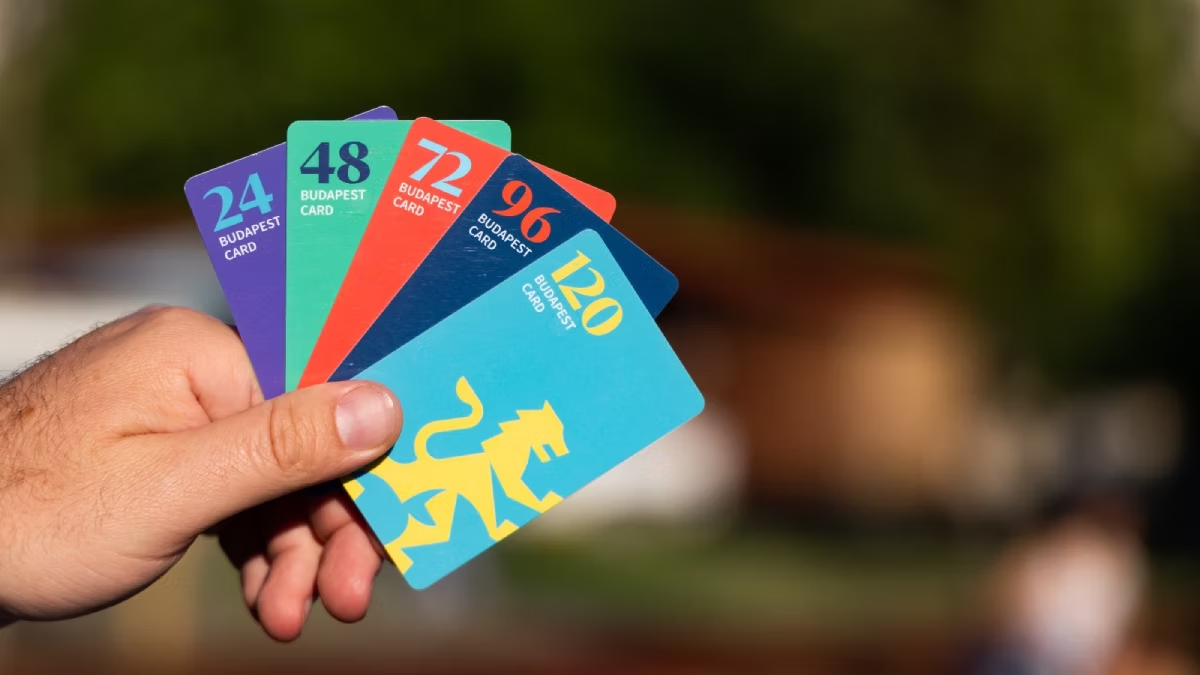
The Budapest Card does not usually make the basilica itself cheaper — it typically gives a discount on the church-hall or combined ticket rather than free entry, and even that discount is modest compared to the card’s price. The card pays for itself through everything else it bundles: free public transport plus free or discounted entry to a long list of other museums and attractions. If St. Stephen’s Basilica is one of only a few things on your list, a standalone skip-the-line ticket is usually the cheaper, simpler choice.
Budapest sells a well-known sightseeing pass, the Budapest Card, that bundles free public transport with free or discounted entry to dozens of attractions around the city — and St. Stephen’s Basilica is one of the places it touches. The question worth answering before you buy is whether that card actually lowers the cost of your basilica visit, or whether you’d do just as well buying a basilica ticket on its own.
This guide breaks down what the Budapest Card covers, how the basilica specifically fits into it, and the simple math for deciding whether the card is worth it for your trip.
What the Budapest Card Actually Covers
The Budapest Card’s core value is unlimited free travel on Budapest’s public transport network for the length of the card, plus free entry to a handful of major museums and free or discounted admission to a longer list of other sights, baths, and guided walking tours. It’s sold in multi-day versions, and the exact roster of inclusions and prices changes from time to time, so check the current lineup before you decide.
The Budapest Card is a city tourist pass, similar in concept to passes sold in other European capitals. The two pillars are unlimited public transport (metro, tram, bus, and suburban rail within the city) for the card’s validity period, and a package of attraction perks: some sights are included free, others are offered at a percentage discount, and the pass often throws in a free walking tour and small discounts at partner shops, restaurants, and spas. Because Budapest periodically revises which attractions are included and at what price, treat any specific figure as a snapshot — always check the current card price and inclusions on the official Budapest Card site before buying.
Does the Budapest Card Include Free Entry to St. Stephen’s Basilica?
No — St. Stephen’s Basilica is typically listed among the card’s discounted attractions rather than its free ones. You still pay something at the basilica ticket office (or online) with the card, just less than the full price. Do not assume the basilica is “included for free” the way a couple of the flagship museums are.
This is the detail that trips people up. Several of Budapest’s biggest museums are usually free with the card, which leads visitors to assume every attraction on the list works the same way. The basilica is different: it’s generally a discount item, meaning cardholders pay a reduced price for the church hall or the combined church-hall-and-terrace ticket rather than walking in for nothing. The size of that discount varies over time, so it’s worth checking the current terms rather than budgeting around an old percentage you saw somewhere online. Either way, the basilica alone is not a reason to buy the card — the saving on one discounted ticket is small next to what the card itself costs.
Doing the Math: When the Card Pays Off
The Budapest Card earns back its cost through volume, not through the basilica. If you’re taking several rides on public transport each day and visiting multiple paid museums, baths, or a guided tour on top of the basilica, the bundled savings can add up past the card’s price. If the basilica is one of only two or three stops on your itinerary, buying a standalone basilica ticket and paying cash fares or single transport tickets is usually cheaper.
Think of the comparison as two separate budgets stacked together, not one. On one side is the cost of a basilica ticket bought directly — a fixed, modest amount for the church hall, or a bit more for the combined church-hall-and-terrace ticket. On the other side is the Budapest Card: its price, minus what you’d have otherwise spent on transport tickets, minus the (small) basilica discount, minus whatever you save on the other attractions and tours you actually use. For a short, basilica-focused stop — walk over, buy a skip-the-line entry ticket, see the church hall and maybe the terrace, move on — the card’s transport and multi-attraction value never gets a chance to kick in, and you’d have paid for a lot of unused potential. For a fuller day that includes public transport back and forth across the city, two or three other paid sights, and perhaps a thermal bath or a walking tour, the same card can genuinely come out cheaper than paying for everything separately.
Who Should Buy the Budapest Card
If your Budapest itinerary is transport-heavy and sightseeing-heavy — several museums, a bath, a walking tour, and plenty of metro and tram rides across multiple days — the Budapest Card is worth pricing out. Add up what you’d spend on individual transport tickets and full-price entries for the attractions you’re actually planning to visit, compare that total to the card’s price, and the case for buying usually becomes clear on paper. Families and groups sometimes find the math even more favorable, since multi-day city passes often carry per-person savings that scale with how much a group is doing together. The basilica discount is a nice bonus on top, not the reason to buy.
Who Should Just Buy a Basilica Ticket
If St. Stephen’s Basilica is a highlight stop within walking distance of your hotel or the Danube Promenade, and your Budapest days aren’t packed with multiple paid museums or long transport hops, a standalone ticket is the simpler and usually cheaper route. A pre-booked entry ticket or a tower access tour gets you the skip-the-line benefit at the ticket office without paying for city-wide transport and attraction access you won’t use. This is also the better fit for a short layover, a single-day city break, or travelers who prefer walking central Pest on foot rather than riding transit between sights — the basilica, the Danube, and the Parliament are all comfortably walkable from Szent István tér.
How to Buy at the Basilica With or Without the Card
Cardholders still need to visit the ticket office (or use the card’s booking channel, where offered) to claim the basilica discount — it isn’t automatic just for having the card in your pocket, and it doesn’t replace the need to queue in high season unless the card’s terms specifically include skip-the-line access. If you decide the card isn’t worth it for your trip, booking a skip-the-line ticket in advance gets you past the ticket-office line, which can build up in the middle of the day during peak season. Whichever route you take, remember that attending Mass or coming to pray is always free and doesn’t require any ticket or card at all.
Frequently Asked Questions
Is St. Stephen’s Basilica free with the Budapest Card?
No, typically not. The basilica is usually a discounted attraction on the Budapest Card rather than a free one, meaning cardholders pay a reduced price rather than walking in at no cost. Check the current card terms, since the exact discount can change.
Does the Budapest Card save money for a basilica-only visit?
Generally no. The card’s value comes from bundling free public transport with free or discounted entry to many attractions, and the basilica alone only accounts for one small discount. If the basilica is your main or only stop, a standalone ticket is usually cheaper.
What does the Budapest Card include besides museum discounts?
The main pillar is unlimited free travel on Budapest’s public transport network — metro, tram, and bus — for the length of the card. It also typically bundles a free walking tour and small discounts at partner restaurants, shops, and thermal baths, on top of the attraction discounts.
How many attractions do I need to visit to make the card worth it?
There’s no fixed number, since it depends on individual ticket prices and how much you’d spend on transport anyway. As a rule of thumb, the card tends to pay off when you’re combining regular public transport use with entry to several other paid sights or a bath, not just the basilica by itself.
Can I skip the ticket-office line with the Budapest Card?
Not automatically — the card gives you a discounted price, but you may still need to queue at the ticket office unless the card’s specific basilica terms include skip-the-line access. A pre-booked skip-the-line basilica ticket is a more reliable way to avoid the line regardless of whether you have the card.
Is it cheaper to buy the Budapest Card or a combined church-and-terrace ticket separately?
If the basilica is one of just a few stops on your trip, buying the combined church-hall-and-terrace ticket directly is usually cheaper than buying the card for the discount alone. The card only starts winning the comparison once its transport and other attraction savings are factored in.
Does the Budapest Card work for groups and families?
Group and family versions or per-person pricing are common with multi-day city cards, and the combined transport and attraction savings can scale well for several travelers moving around the city together. Compare the per-person card price against what each person would spend separately on transport and tickets before deciding.
Where do I buy the Budapest Card?
The card is sold through the official Budapest Card website and at various points around the city, including some transport and tourist information counters. Buying online in advance lets you check the current price and inclusions before you commit, which is worth doing since the lineup of covered attractions can change.
