

St. Stephen’s Basilica Dress Code & Rules of Conduct Guide
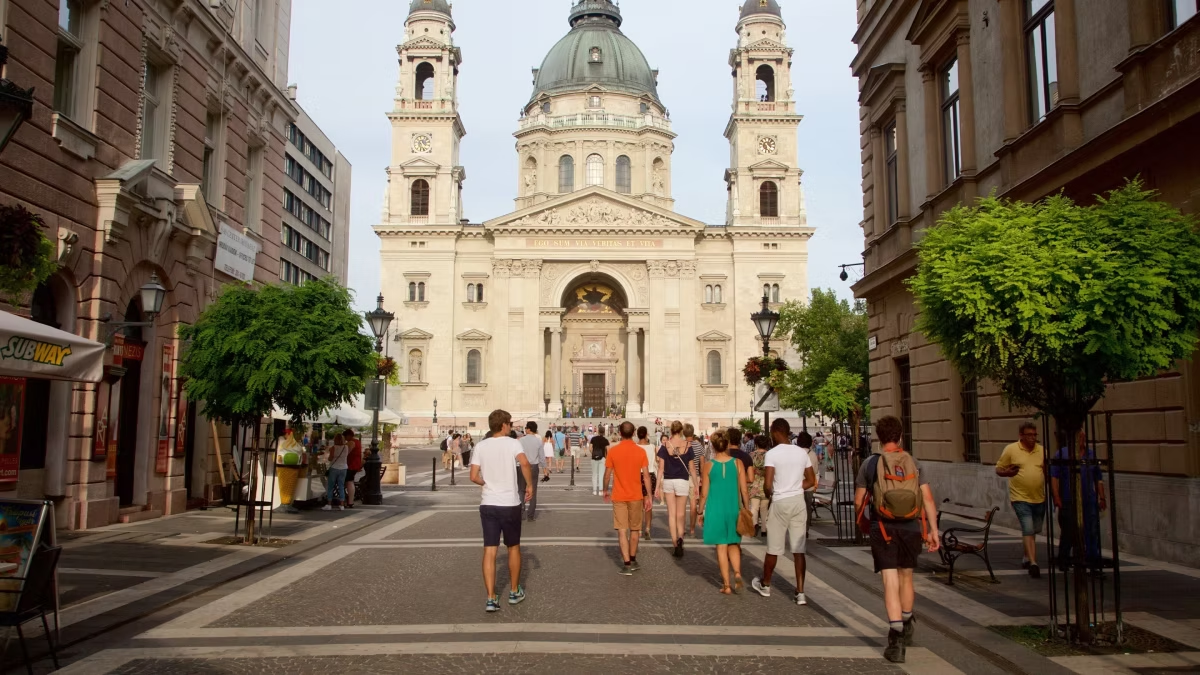
St. Stephen’s Basilica asks visitors to keep shoulders and knees covered and to skip shorts, and men should remove hats before entering. Enforcement is real at the church-hall entrance, so bring a light scarf or shawl if your outfit doesn’t quite meet the rule. Inside, keep voices low, silence your phone, skip flash near services, and be discreet with photography during Mass — simple courtesies that go a long way in an active place of worship.
St. Stephen’s Basilica is a working Catholic parish church as well as one of Budapest’s grandest sights, and the dress code and conduct expectations follow from that. None of it is complicated, and dressing and behaving respectfully is an easy way to make your visit smoother rather than a hassle at the door.
This guide covers exactly what to wear, what staff check for, and how to act once you’re inside — including practical tips for summer travelers who show up in shorts and sandals.
The Dress Code, in Plain Terms
Cover your shoulders and knees, and leave the shorts for later — long pants, skirts below the knee, or knee-length or longer dresses all work. Men are asked to remove hats before entering. There’s no rule against sleeveless tops or dresses as long as your shoulders are covered by something, even a light layer thrown on at the door.
The rule at St. Stephen’s Basilica is the same one you’ll meet at most major churches in Europe: shoulders and knees covered, no shorts. That means:
- Shoulders covered — a T-shirt, blouse, or a scarf draped over bare arms is enough.
- Knees covered — trousers, jeans, longer skirts, or knee-length and longer dresses; shorts and very short skirts are not permitted.
- Hats off for men — a courtesy expected on entering the church hall, especially near the altar and the Holy Right Hand chapel.
There’s no strict dress-color or fabric requirement, and it’s a working church rather than a museum with a formal uniform policy, so smart-casual travel clothing is fine as long as it covers the right areas.
Is the Dress Code Actually Enforced?
Yes. Staff and volunteers at the church-hall entrance do check, particularly in busy tourist season, and visitors in shorts or with bare shoulders are sometimes turned away or asked to cover up before they’re let through. It’s not meant to be unfriendly — it’s the same standard applied everywhere, and enforcement protects the character of an active place of worship. Don’t count on being waved through; plan your outfit before you arrive rather than hoping the rule won’t be checked that day.
Pack a Scarf or Shawl
The simplest fix for the dress code is to carry a lightweight scarf, sarong, or shawl in your bag. It doubles as a shoulder cover, a knee-length wrap over shorts, or sun protection while you wait in line, and it takes up almost no space. This is especially worth doing if you’re combining the basilica with a day of sightseeing where you’d otherwise be dressed for walking and summer heat rather than for a church visit.
Summer Travelers: What to Do About Shorts
If shorts are all you’re wearing that day, the easiest fix is a wrap or shawl tied around your waist to cover your knees, or packing a pair of light long trousers or a maxi skirt just for indoor sightseeing stops. Budapest summers are warm, so many visitors carry a cover-up rather than sweat through long pants all day.
Budapest gets genuinely hot in July and August, and shorts are a completely reasonable choice for walking the city. The trick is planning for the handful of stops — like this basilica — where the dress code applies. A packable wrap, a pair of lightweight linen trousers you can pull on over shorts, or a long skirt that folds small in a daypack all solve the problem without requiring you to overheat for the rest of the day. If you’re touring the dome’s panorama terrace as well as the church hall, note that the dress code applies to the church-hall interior where the altar and relic are — dress for that part, and the rest of your day can stay as casual as the weather demands.
Rules of Conduct Inside the Basilica
Keep your voice down, switch your phone to silent, avoid eating or drinking inside, and be mindful of anyone praying nearby. Photography is generally allowed in the church hall, but skip flash and stay discreet — and if a service is underway, hold off on picture-taking near the altar out of respect for worshippers.
Beyond what you wear, a few courtesies make for a good visit and keep the church hall pleasant for everyone, worshippers and sightseers alike:
- Stay quiet. Conversations carry in the nave’s acoustics — keep voices low, especially near the Holy Right Hand chapel and the main altar.
- Silence your phone. Ringtones and notification sounds are jarring in a working church; switch to silent before you go in.
- No flash photography near services. General photography is fine in most areas, but skip the flash and be discreet if Mass or another service is in progress.
- No eating or drinking. Save snacks and coffee for the square outside.
- Give worshippers space. If someone is praying or a service is happening in a side chapel, walk around quietly rather than through the area.
- Move aside for processions and services. On days with weddings, funerals, or special observances, sightseeing access to parts of the church hall may be limited temporarily.
None of this is about restricting your visit — it’s about sharing the space respectfully with people who are there to pray, which is easy to do and doesn’t take anything away from seeing the basilica’s interior.
Visiting During Mass
Attending Mass or coming to pray is free and open to everyone, and it’s a genuinely good way to experience the basilica beyond a ticketed visit. If you’re there as a sightseer while a service is happening, the same rules of conduct apply but with extra care: keep to the back or sides, avoid walking near the altar, don’t take flash photos, and be ready to pause picture-taking altogether if it feels intrusive. Our guide to Mass times has the weekly schedule if you’d like to attend a service or plan your sightseeing around it.
Frequently Asked Questions
What is the dress code for St. Stephen’s Basilica?
Shoulders and knees must be covered and shorts aren’t permitted; men are asked to remove hats on entering. Trousers, jeans, and longer skirts or dresses all work, and a scarf or light layer over bare shoulders is enough to meet the rule.
Will I be turned away for wearing shorts?
You may be. Staff at the church-hall entrance do check, particularly in busy season, and visitors in shorts or with bare shoulders are sometimes asked to cover up or wait until they can. It’s best to plan your outfit or carry a cover-up rather than assume the rule won’t be enforced.
Can I wear a sleeveless top or dress?
Yes, as long as your shoulders are covered by something — a light scarf, shawl, or cardigan draped over bare arms satisfies the rule. It doesn’t need to be a full sleeve, just coverage.
Do I need to cover my head?
There’s no headscarf requirement for women. Men are asked to remove hats before entering the church hall as a mark of respect.
Is there somewhere to buy a cover-up if I forget one?
There isn’t a dedicated shop at the entrance, so it’s safer to bring your own scarf or shawl. Some nearby shops around Szent István tér sell souvenirs and light clothing, but relying on finding one on the spot isn’t guaranteed.
Can I take photos inside?
Generally yes — photography without flash is allowed in most of the church hall. Be discreet and avoid flash altogether if a service is underway, and hold off on photographing worshippers directly.
Are the dress code and conduct rules different for the dome terrace?
The strict dress code applies to the church hall, where the altar and the Holy Right Hand relic are. The panorama terrace is a separate, non-liturgical space, so the same formal dress requirement isn’t typically enforced there, though modest, comfortable clothing is still sensible for the climb.
Is it disrespectful to visit as a tourist rather than to pray?
No. St. Stephen’s Basilica welcomes sightseers as part of its role as a monument, and ticketed visits fund its upkeep. Dressing appropriately and keeping quiet and respectful, especially near the relic and during services, is all that’s asked.
