

St. Stephen’s Basilica Photo Guide: Interior, Exterior, Dome
The classic exterior shot is the facade framed straight down Zrínyi utca, and the square itself is worth a frame by day, floodlit at night, and during the winter light show. Inside, the dome mosaics, gilded altar, and wide nave need a steady hand or a higher ISO rather than flash, and the Holy Right Hand chapel calls for discretion. The panorama terrace gives a 360-degree view of Budapest, best in the late afternoon and at blue hour.
St. Stephen’s Basilica photographs well from almost every angle — the neoclassical facade, the gilded interior, and the rooftop view all give a different picture of the building. This guide covers where photographers get their best shots, what the light and conditions are like at each spot, and the etiquette to keep in mind, since this is a working parish church as well as a landmark.
Whether you’re planning shots in advance of a visit or just want to know what the place actually looks like, the sections below cover the exterior, the interior, and the dome terrace in turn.
Best Exterior Shots
The signature shot is the facade seen straight down Zrínyi utca, the pedestrian street that lines it up dead-center between the buildings. The square in front adds context by day, the whole building is floodlit after dark, and a seasonal light show adds color in winter.
Zrínyi utca, the classic view. Zrínyi utca runs from the basilica toward the Chain Bridge and the Danube, and its buildings frame the facade like a corridor. Standing partway down the street and shooting back toward the entrance is the single most photographed angle of the basilica, because the street itself does the composing for you — no wide-angle lens required, though one helps if you want the full 96-meter height of the building in frame. Morning and early evening light rake across the facade nicely; midday sun tends to flatten the stone detail.
Szent István tér, the square. The pedestrian square in front of the basilica gives a wider, more open shot, with room to include the fountain, the outdoor cafés, and passersby for scale. It’s also the best spot for a full-building shot with sky, since Zrínyi utca crops the top of the dome unless you back up. In December the square fills with a Christmas market, which adds stalls, lights, and a different foreground entirely.
Floodlit at night. The facade is illuminated after dark, and the warm floodlighting against a darkening sky is one of the most reliable “postcard” shots in Budapest — arrive at dusk rather than full dark for a blue-hour sky behind the lit stone, which reads better in a photo than pure black. A tripod or a steady surface helps at night; handheld shots at higher ISO are workable on modern phones but a mini tripod gives cleaner results.
The winter light show. In the colder months the square hosts a seasonal light and sound display projected onto the facade, drawing evening crowds who come specifically to watch and photograph it. If you’re visiting in winter, check locally for the current schedule, since timing and dates vary by year — but the projected light adds color and movement that a plain floodlit shot doesn’t have.
Interior Photography: Dome, Altar & Nave
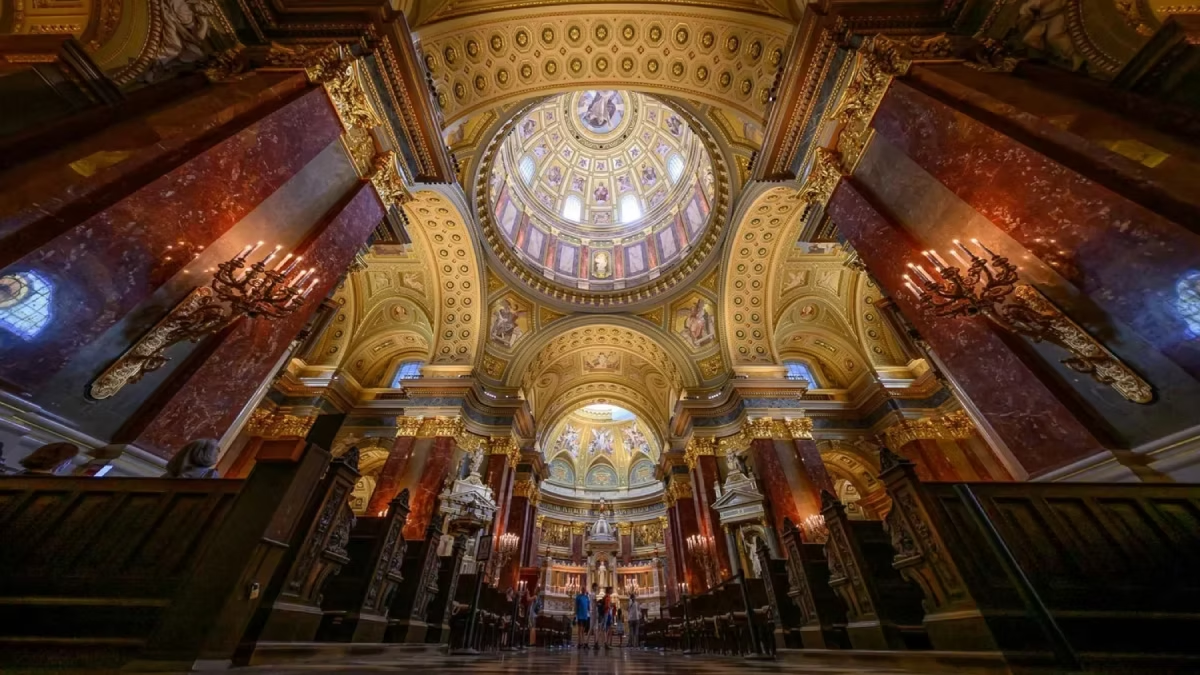
Photography is generally allowed inside the church hall, but it’s a working place of worship, so no flash and no photography during Mass or other services. The dome mosaics, the gilded high altar, and wide nave shots are the main interior subjects, and all three benefit from a higher ISO or a steady hand rather than flash, which the low interior light makes tempting but which washes out the gilding and disturbs other visitors.
Dome mosaics. Looking straight up into the dome from the center of the nave shows off the mosaic work in the cupola, lit by the windows around its base. This shot rewards patience — the light shifts through the day, and a slightly later or earlier visit changes how much of the mosaic detail is legible versus lost in shadow. A wide-angle lens or your phone’s wide-angle setting captures more of the dome in one frame than a standard lens does from directly beneath it.
The high altar. The gilded main altar sits at the far end of the nave and is one of the most photographed interior details, especially with the golden light that settles on it during the church hall’s open hours. It’s also close to the Holy Right Hand chapel behind the altar, where a coin-operated light briefly illuminates the reliquary containing the mummified hand of King St. Stephen I — a striking but genuinely devotional object, so photograph it quietly and without flash, and be ready to give way if someone is praying there.
Wide nave shots. A shot down the length of the nave toward the altar, or back toward the entrance and organ loft, captures the scale of Budapest’s largest church. The interior is dim by design, so this is where camera settings matter most: raise the ISO, brace against a pew or pillar instead of using flash, and expect a slightly longer shutter speed on a phone’s night mode. Tripods are typically not permitted in the nave, so a stable stance or a pillar to lean against does the job instead.
A note on etiquette. This is an active parish church, not a museum, and services take place throughout the day. Do not photograph during Mass, keep your voice and shutter sounds down, and be ready to pause if a wedding, funeral, or private prayer is underway near where you’re shooting. Our guide to Mass times lists the regular schedule so you can plan photography around it rather than during it.
Dome & Panorama Terrace Photos
The panorama terrace beneath the dome gives a 360-degree view over Budapest, and the best light is late afternoon through blue hour, when the low sun and then the city lights both work in your favor. Expect to shoot through or over a railing rather than from a fully open ledge, so a lens hood and a bit of patience for a clean angle both help.
The panorama terrace wraps around the base of the dome and opens up a full circle of Budapest — the Danube and the Chain Bridge to one side, the Hungarian Parliament along the river, and the rooftops of Pest spreading out below. Because the view is unobstructed on every side, it’s worth walking the full loop rather than shooting from the first spot you reach.
Late afternoon is the strongest light for the terrace: the sun is low enough to pick out texture on the rooftops and the Danube without the harsh contrast of midday. Staying through blue hour, just after sunset, adds the city’s lights and a deep blue sky that tends to outperform a full-daylight shot, especially looking toward the Parliament building, which is floodlit after dark. Getting up top for sunset means timing your visit against the terrace’s closing time, which runs later than the church hall but does vary by season, so check current hours before you plan a blue-hour trip.
The terrace itself is enclosed by railings for safety, so most shots are taken through the gaps or angled over the top rather than from a completely open edge. A phone or a compact camera handles this easily; if you’re shooting with an SLR and a longer lens, allow a little extra time to find a clean gap in the railing without other visitors’ hands or heads in frame. The terrace is reached by two connecting elevators or by climbing the roughly 360-step staircase, and either way you’ll arrive a little out of breath — worth a minute to catch it before you start shooting.
Practical Camera & Phone Tips
A few points that apply across the whole visit:
- No flash indoors. Flash washes out the gilding and mosaics, disturbs other visitors and anyone praying, and isn’t necessary — modern phone cameras and small sensor cameras both handle the church hall’s low light well in night or low-light mode.
- Raise your ISO instead. For the nave and dome shots, a higher ISO with a slightly longer exposure, braced against something solid, beats flash every time for both quality and courtesy.
- Pack light. Large tripods and bags can be restricted inside the church hall and on the terrace; a small travel tripod or just a steady stance works better in practice.
- Charge up and clear space. Between the interior, the terrace, and the exterior night shots, a basilica photo visit can run through a full battery and a fair amount of storage — especially if you’re shooting video of the winter light show or the blue-hour terrace view.
- Mind the weather on the terrace. It’s an open-air rooftop, so wind and cold cut into how long you’ll want to linger for the best light — dress for it, particularly for a late-afternoon or evening shoot in winter.
- Respect the “no photos” moments. During Mass, weddings, or funerals, put the camera away entirely rather than shooting discreetly from the back.
If you’d like a guide who can point out the best interior angles and timing in person, a tour with tower access pairs a guided visit with terrace access, which is a practical way to plan your photo stops without missing the light.
Frequently Asked Questions
Is photography allowed inside St. Stephen’s Basilica?
Yes, photography is generally allowed in the church hall for personal use, but flash is not permitted and photography is not appropriate during Mass or other services. Tripods are typically restricted in the nave. Treat the interior as a place of worship first and a photo subject second.
What is the best spot for a photo of the facade?
The classic shot is from Zrínyi utca, the pedestrian street that lines up straight with the entrance and frames the facade between its buildings. Szent István tér, the square in front, gives a wider shot with more sky and street life. Both work well in daylight, and the facade is also floodlit after dark.
When is the best time to photograph the dome terrace?
Late afternoon through blue hour, shortly after sunset, gives the strongest light for the 360-degree view from the panorama terrace. The low sun brings out texture across the rooftops, and the city lights and Parliament floodlighting add a second good window once the sky darkens.
Can I photograph the Holy Right Hand relic?
You can, but quietly and without flash — the reliquary is illuminated briefly by a coin-operated light, and it’s a genuine object of devotion, not a display case. Give way to anyone praying there and keep photography discreet.
Is there a winter light show at the basilica?
Yes, a seasonal light and sound display is projected onto the facade in the square during the colder months, and it draws evening crowds who come to watch and photograph it. Dates and timing vary by year, so check locally if you’re planning a winter evening visit around it.
Do I need a tripod for the interior shots?
Not really, and tripods are typically not allowed in the nave in any case. A higher ISO setting and bracing against a pew or pillar produces good results in the church hall’s low light without needing extra gear.
Is the panorama terrace fully open, or are there railings in the way?
The terrace is enclosed by railings for safety, so most photos are taken through the gaps or angled over the top rather than from a fully open edge. It’s still possible to get a clean 360-degree set of shots; it just takes a bit more care with framing than an unobstructed rooftop would.
Can I fly a drone for basilica photos?
No. Drone flights are restricted over central Budapest and around the basilica specifically, so all photography here is ground-based or from the terrace itself. The terrace view is the closest equivalent to an aerial shot you’ll get.
