

St. Stephen’s Basilica Panorama Terrace: Views Over Budapest
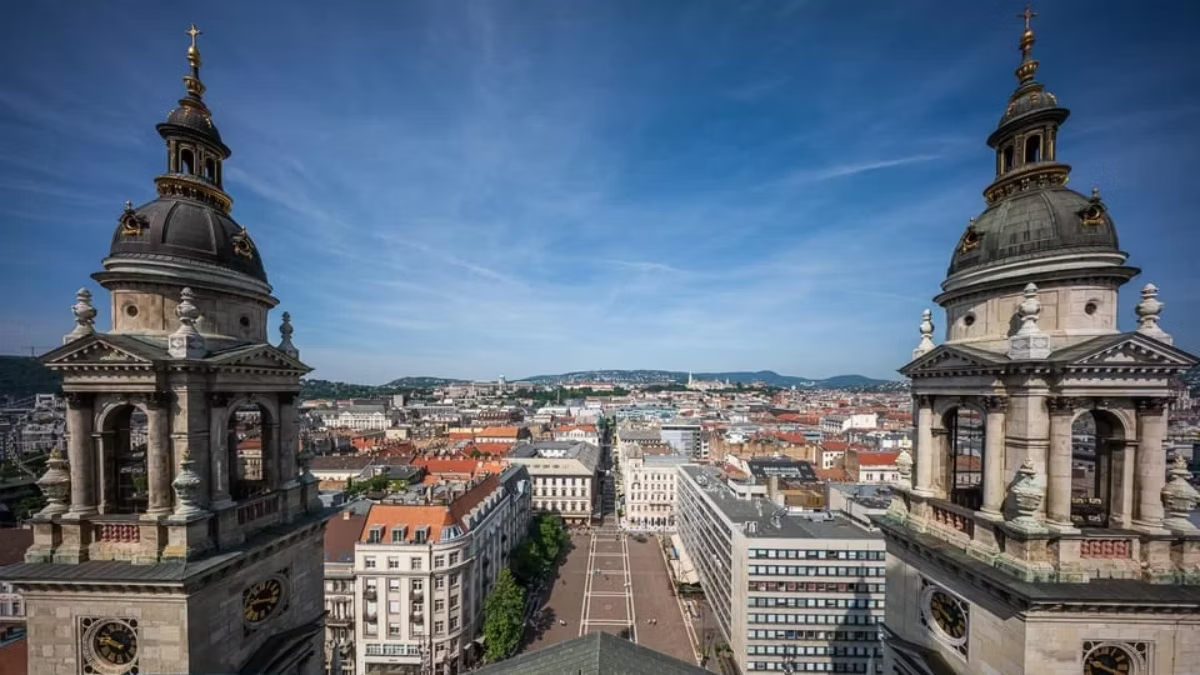
The panorama terrace circles the base of St. Stephen’s Basilica’s dome, 96 m above Szent István tér, giving a 360-degree view over Budapest — the Parliament and the Danube bridges to the north, the Buda hills to the west, and the Pest rooftops in every other direction. You reach it by two connecting elevators or a staircase of roughly 360 steps, and access is included in the terrace-and-treasury or combined ticket, not the church-hall-only ticket. Late afternoon into blue hour is the best light, but the small second elevator can queue and the terrace itself is exposed to wind, so bring a jacket.
The dome’s panorama terrace is the reason many visitors climb at all — the church hall is the basilica’s heart, but the terrace is its payoff, a walkway around the base of the dome that puts you level with the Hungarian Parliament across the rooftops. At 96 m, it’s tied with the Parliament for the tallest point a visitor can legally reach in Budapest, since no building in the city is allowed to exceed that height.
This guide covers what you’ll actually see up there, how to get to the top (elevators versus stairs, and the queue to be honest about), what it costs, when it’s open, and the best time of day to go for the light.
The 360° View From the Dome
From the terrace you get an unbroken circuit around the dome, so the view genuinely is 360 degrees rather than a single lookout. The Hungarian Parliament and the Danube’s bridges dominate one side, the green ridge of the Buda hills fills another, and the close-packed rooftops of Pest — including Andrássy Avenue running off toward City Park — fill the rest.
Walk the full loop and the city unfolds in sections. Facing roughly north, the Parliament’s ribbed dome and spires sit across the rooftops with the Danube and its bridges visible beyond it — Chain Bridge is the most recognizable from this angle. Turn west and the Buda side rises into wooded hills, with Buda Castle and, on a clear day, the Citadella on Gellért Hill visible above the river. The remaining stretch of the terrace looks out over the dense, low-rise rooftops of central Pest, a good vantage point for picking out Andrássy Avenue and getting a sense of just how flat and grid-like this side of the city is compared to hilly Buda.
How High Is the Terrace? 96 Meters, Tied With Parliament
The terrace sits 96 m above street level, the same height as the Hungarian Parliament building — by long-standing convention, no structure in Budapest is allowed to exceed 96 m, a figure chosen to reference the Magyar conquest of 896 and the 1896 millennial celebrations. That makes the basilica’s dome one of only two places in the city where the public can stand at the maximum legal height, and it’s the reason the terrace’s view carries as far as it does across a city with few genuine high-rises. Our basilica vs. Parliament comparison looks at how the two 96 m landmarks stack up if you’re deciding between them.
Getting Up: Elevators or the Stairs
Two connecting elevators carry most visitors up to the terrace, or you can climb a staircase of roughly 360 steps instead. The first elevator is reasonably spacious, but the second is small — around four people per trip — and it’s the point where lines form in the busy afternoon, even for visitors with a booked ticket.
The standard route is a pair of elevators used one after the other: the first does most of the vertical work, and the second, smaller car finishes the climb to the terrace level. That second elevator is the honest bottleneck of a basilica visit — it holds only a handful of people at a time, so if you arrive in the early-to-mid afternoon when tour groups and independent visitors overlap, expect to wait your turn rather than walk straight on. Coming right at opening or later in the day tends to move faster. If you’d rather skip the wait or want the exercise, the alternative is a staircase of roughly 360 steps that winds up inside the tower; some visitors take the stairs up and the elevators down, or the reverse, to split the effort. Either way, once you’re up, the terrace itself is a walkway with no seating, so it’s a stop to see the view and move on rather than linger for a long rest. A guided tower access tour uses the same elevators and stairs, with a guide narrating the dome’s history — including its 1868 collapse — as you go.
What the Terrace Ticket Costs
Access to the panorama terrace is sold as part of the terrace-and-treasury ticket, priced at roughly 5,000 HUF (about €12), or as part of the combined ticket covering the church hall, terrace, and treasury for about 6,800 HUF (around €16). It is not included with a church-hall-only admission — the interior and the terrace are genuinely separate tickets, so decide in advance whether you want both. Our ticket prices guide breaks down every option, including student, senior, and group rates available at the ticket office, and prices there are set in forint, with euro figures shifting a little with the exchange rate.
Terrace Hours
The terrace and treasury keep noticeably longer hours than the church hall: they open daily from around 9 AM, including Sunday mornings when the church hall is still reserved for Mass, and stay open later into the evening in summer, with an earlier close in winter. Because the exact closing time shifts by season and published times vary between sources, treat any single closing hour as a guide rather than a guarantee and confirm your date on the official site, especially if you’re planning to arrive close to closing. See our full opening hours guide for the church-hall schedule alongside the terrace’s.
Best Time to Visit: Late Afternoon & Blue Hour
Late afternoon through blue hour — the stretch just after sunset, when the sky still holds color and the city’s lights come on — is generally the best time for the terrace, both for photos and for a calmer crowd than midday. Morning right at opening is the quietest overall, though the light is flatter.
If photography is the priority, aim for the last hour or two before closing in the warmer months, when the low sun warms the rooftops and the Parliament’s dome catches the light, then stay if you can until blue hour, when the city’s lights start to glow against a still-blue sky — a widely loved combination for skyline shots from up here. If you’d rather avoid people more than chase light, the 9 AM opening is calmer on the terrace itself, though the midday sun overhead can be harsh and hazy for photos. Midday and the hour before evening organ or classical concerts are the busiest stretches, when the second elevator’s queue is at its worst.
Accessibility on the Terrace
Access to the terrace is more variable than the church hall, and it’s worth being upfront about that rather than overselling it. The two elevators mean most visitors don’t need to climb the full staircase, but the second, smaller elevator is the pinch point, and depending on the exact route in use there may be a short stretch of steps at or near the terrace itself. If mobility is a concern, our dedicated accessibility guide covers what to expect in more detail and recommends confirming current terrace access with the basilica directly before you go, since elevator status can change day to day.
What to Bring
The terrace is an open-air walkway well above the rooftops, so it’s noticeably breezier and cooler than street level even on a mild day — bring a light jacket regardless of season, and something warmer in fall, winter, or spring evenings. There’s no seating and limited shelter, so a few minutes is usually enough once you’ve taken in the view and a few photos. A phone or camera with a wide lens helps capture the full sweep of the skyline, and comfortable shoes matter more than usual if you’re planning to take the stairs rather than the elevators.
Frequently Asked Questions
How high is St. Stephen’s Basilica’s panorama terrace?
The terrace sits about 96 m above street level, the same height as the Hungarian Parliament. No building in Budapest is allowed to exceed 96 m, so the basilica and the Parliament share the title of the city’s tallest structures.
What can you see from the panorama terrace?
A full 360-degree view: the Hungarian Parliament and the Danube’s bridges on one side, the Buda hills and Buda Castle on another, and the dense rooftops of central Pest, including Andrássy Avenue, filling out the rest of the circuit around the dome.
How do you get up to the panorama terrace?
Two connecting elevators carry most visitors up, or you can climb a staircase of roughly 360 steps instead. The second, smaller elevator holds only a handful of people at a time and is the main point where queues form, especially in the afternoon.
Is the panorama terrace included in the basic entry ticket?
No. The church-hall ticket covers the nave, high altar, and Holy Right Hand chapel only. The terrace requires the separate terrace-and-treasury ticket or the combined ticket that covers all three.
What is the best time to visit the terrace for photos?
Late afternoon through blue hour, when warm light hits the rooftops and the city’s lights start to glow against a still-colored sky. Early morning right at opening is quieter but the light is flatter.
Does the second elevator really queue?
Yes, honestly. It’s small, holding around four people per trip, and lines form there in the busy afternoon window regardless of whether you’ve booked a ticket in advance. Visiting near opening or later in the day usually means a shorter wait.
Is the panorama terrace wheelchair accessible?
Mostly, via the two elevators, but access is more variable than the church hall and may involve a short stretch of steps depending on the route in use. Check our accessibility guide and confirm current terrace access with the basilica before you visit if this matters to your plans.
What should I bring up to the terrace?
A light jacket at minimum, since the open-air walkway is breezier and cooler than street level in every season. There’s no seating up there, so plan for a focused stop of a few minutes rather than a long stay.
